
Criminal Cases in the Loving County Courts
Loving County uses three local court tracks. The 143rd Judicial District Court hears felonies and district-level juvenile matters. The constitutional County Court handles Class A and Class B misdemeanors within its jurisdiction. Loving County Justice Court, Precincts 1 through 4, Place 1, handles fine-only misdemeanors, traffic matters, and its lawful magistrate work. There is no municipal court because Loving County has no incorporated municipality. The court level matters because a single broad request for a "criminal history" may not tell the clerk which file to locate.
Mozelle Carr serves as the combination county and district clerk. Criminal case files for both the district and county tracks are kept through the combined office at 100 Bell Street in Mentone. The official combined-clerk page shows the clerk's local contact and record links.
The office listing is the practical starting point when an online result does not reveal the filed charge, full docket, judgment, or certification options.
143rd District Cases in Loving County
The 143rd Judicial District spans Loving, Reeves, and Ward Counties. That regional structure can confuse a caller who reaches administrative staff outside Mentone. The judge's administrative office is at 400 South Allen, Suite 200, in Monahans, but Loving County felony filings remain with the Loving County combined clerk. A searcher should name Loving County, the defendant spelling used when the case was filed, an approximate year, and the cause number when known.
The official Loving County district-clerk page identifies the 143rd District and links court resources.
That page helps confirm the district route, while the combined clerk remains the custodian to contact about the actual Loving County case file.
How to Search Case Records
A complete Loving County case search uses local confirmation even when an electronic match appears. Begin with the filed case, not the arrest account. A booking charge is an early allegation; the prosecutor may reject, reduce, amend, or enhance it before filing. The court record then shows what was actually charged and how each count ended.
- Start at the Loving County combined clerk's dedicated site and gather the court, cause number, party name, and filing year shown.
- Try re:SearchTX with the cause number. If it is unknown, use the party name, Loving County filter, court type, and a narrow filing-date range.
- Call the combined clerk at (432) 309-9500 extension 6 to verify whether the file is online, at the public counter, archived, or available by mail.
- For a fine-only or traffic matter, contact Justice Court separately at (432) 286-9544 because it has no published online case search.
- Ask for the register of actions and final judgment, then specify each plain or certified copy needed. No current Loving County criminal-copy price is published.
The re:SearchTX interface supplies these useful controls for participating court data.
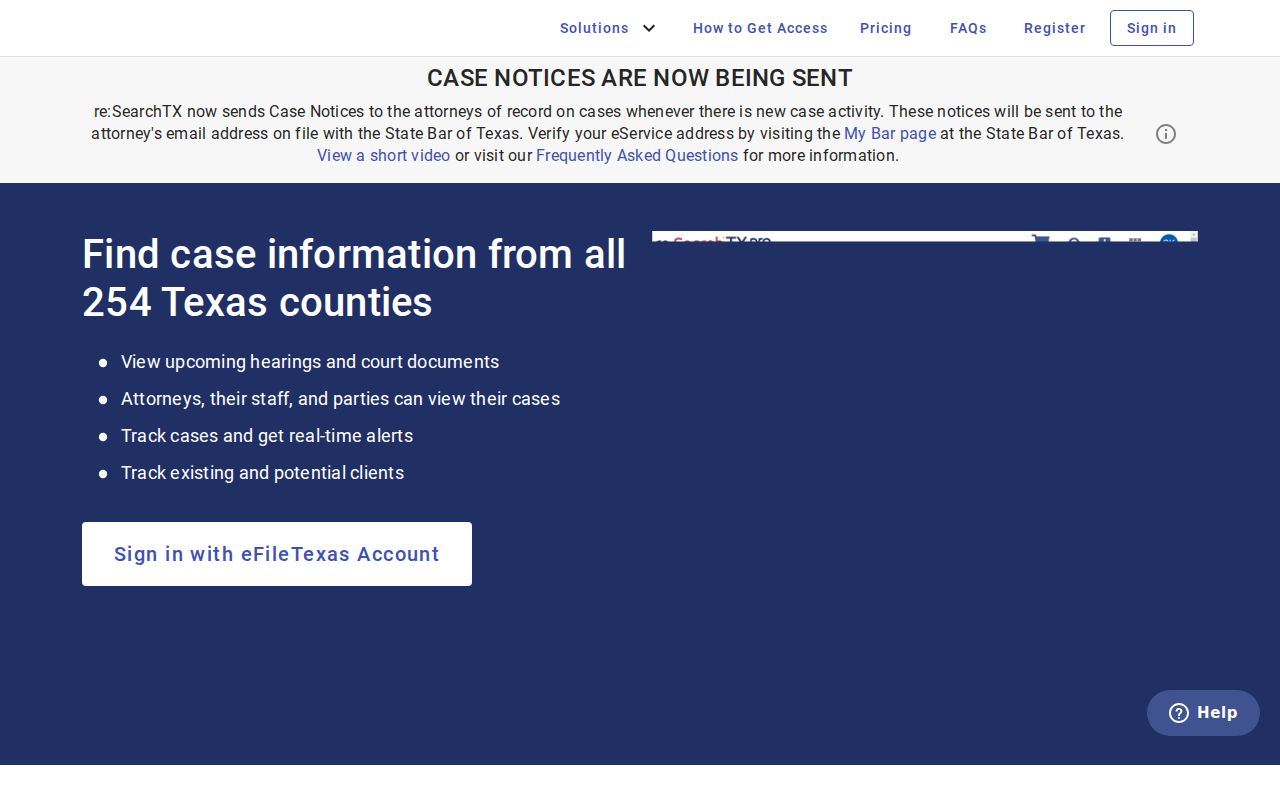
The filters can narrow a search, but missing results still require a direct Loving County clerk check.
| Field Label | Type | Required | Options or Format Notes |
|---|---|---|---|
| Person or party name | Text | One search basis | May appear as separate first and last name fields or a combined name |
| Case number | Text | Alternate | Most reliable search key when the cause number is known |
| Location or county | Filter | Optional | Select Loving County or the 143rd District when available |
| Court or type | Filter | Optional | Use the criminal court category offered in the live view |
| Date filed range | Date filter | Optional | Helps narrow common names and approximate filing years |
| Result sort or filter | Controls | Optional | Controls vary with the result view and access level |
Why re:SearchTX Misses Loving County Cases
re:SearchTX should not be treated as a complete statewide criminal-case lookup. The Texas Judicial Council reported that the portal's large document collection excluded criminal-case records, even as court-system integration expanded. Public users also may see less than judges, clerks, or attorneys. A blank search can mean the court does not publish that record there, an older file remains in a local or paper system, access is restricted, a name differs, or an upload has not arrived.
The county-linked CountyGovernmentRecords interface is not a substitute. Its public fields are aimed mainly at recorded instruments, so a deed-index result should never be presented as a Loving County criminal record search. The safe chain is electronic check, combined-clerk verification, then the correct court counter or mail route. Friday matters too: the combined clerk's published hours end at noon.
Note: A missing portal result does not prove that no Loving County criminal case exists.
What the Case File Shows
A Loving County criminal case file is built around one cause number. It can show the filed charge, the court's chronological docket, pleas, motions, settings, disposition, judgment, and sentence. This differs from a sheriff report, which describes an alleged event, and from a booking record, which captures intake. The best reading uses the final judgment for the outcome and the register of actions for the path that led there.
The official Loving County Justice Court page shows the separate court location and its criminal forms.

Its plea and related forms do not create an online case lookup, so Justice Court records still require direct court contact.
| Case Number & Court | Identifies the cause, court level, filing date, case type, and current status. |
|---|---|
| Charging Document | Shows the complaint, information, or indictment, plus the statute, count, and filed offense level. |
| Docket Entries | Lists filings, counsel appointments, motions, settings, pleas, orders, capias entries, and mandates in time order. |
| Hearing Dates | May show the date, time, type, and courtroom when those details are posted electronically. |
| Disposition & Judgment | Records the outcome for each count, such as conviction, dismissal, acquittal, deferred adjudication, or no-bill when entered. |
| Sentence & Conditions | May state confinement, community supervision, fines, costs, restitution, and other public judgment terms. |
Loving County Case Levels Explained
Texas offense labels help route a Loving County search. Capital, first-degree, second-degree, third-degree, and state-jail felonies belong in the 143rd District Court. Class A and Class B misdemeanors belong in the constitutional County Court when within its lawful jurisdiction. Class C misdemeanors are fine-only and may be handled by Loving County Justice Court. The venue tells the searcher which clerk or court to ask, but it does not by itself reveal the outcome.
The dedicated Loving County and District Clerk site serves as the local web access point for filed records and posted material.
Use it to orient the request, then confirm with the clerk whether a specific criminal file or document is available through the site.
- Indictment
- A felony charging instrument returned as a true bill by a grand jury.
- Information
- A prosecutor-filed charging instrument commonly used for misdemeanors and some cases with a valid indictment waiver.
- Capias
- A court writ ordering an arrest, often tied to a later case event or judgment.
- Community supervision
- The Texas statutory term often called probation, imposed and tracked as part of the court result.
Stages of a Criminal Case
Each stage of a Loving County prosecution may create a new docket entry. After an arrest, magistration must occur without unnecessary delay, generally no later than 48 hours under Texas Code of Criminal Procedure Article 15.17. The magistrate gives warnings and addresses counsel, bail, and release conditions. Prosecutors then decide what to file. Felonies usually require a grand-jury indictment unless the right is validly waived, while misdemeanor cases use the charging form Texas law requires.
Case flow: Charges Filed → Arraignment → Pretrial → Plea or Trial → Disposition → Sentencing
Pretrial docket entries may include discovery, motions, counsel changes, and settings. A plea, dismissal, or trial resolves the charge. A conviction leads to judgment and sentence; eligible defendants may receive community supervision. An online docket can list those events without providing every underlying PDF.
Reading Loving County Criminal Dispositions
"Disposed" means the court entered a terminal event. It does not mean "convicted." Read the outcome for each count and open the judgment when public access permits. A conviction follows a guilty plea or trial finding and judgment. A dismissal ends the filed charge without a conviction on that count. An acquittal is a not-guilty result. A no-bill means the grand jury declined the presented indictment. Deferred adjudication postpones a finding of guilt while the person completes supervision; it is not the same as dismissal.
Charge labels can also change between agencies. The arresting officer records an intake allegation, the prosecutor chooses the filed charge, and the judgment states the final court result. Comparing only a booking label with a docket title can hide amendments or separate counts. For broader context about the record created before filing, consult Loving County arrest history and booking records.
Note: A dismissal does not automatically delete the related arrest or booking record under Texas law.
Access & Restrictions
Texas court records follow judicial access rules and court orders, not merely the Texas Public Information Act process used for ordinary executive-branch records. The Texas Judicial Branch public-access framework explains the electronic access system. Public case files can still omit sealed documents, juvenile information, protected victim or minor data, Social Security numbers, full birth dates, and material covered by an expunction or order of nondisclosure.
If access is denied, request the legal basis and follow the court's review process. Do not send a routine public-information request to the sheriff for a court pleading the clerk holds. Likewise, the clerk cannot produce an arresting agency's offense report or create a statewide criminal-history summary. Each custodian answers only for its own records.
Requesting Archived Loving County Cases
Older Loving County case records may require a clerk-assisted archive search. Provide the defendant's spelling at the time, approximate year, offense, court level, and cause number if known. Ask for the docket or register of actions first. That short record can identify which complaint, information, indictment, order, judgment, or sentence should be copied. For certification, list each document and the number of certified copies required. The combined clerk's mailing address is P.O. Box 194, Mentone, Texas 79754.
Federal criminal cases are separate. Loving County lies in the Pecos Division of the Western District of Texas, and federal dockets use PACER, which requires registration and can charge for searches and documents.
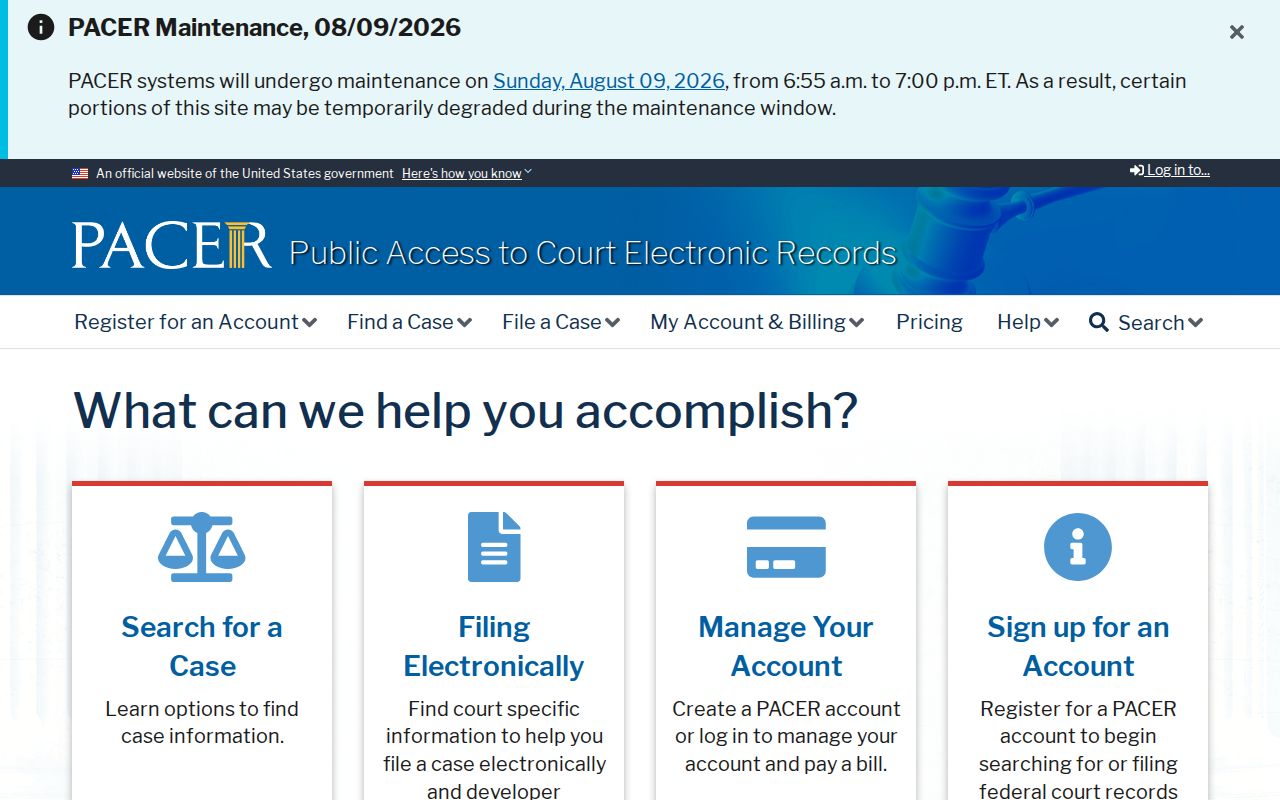
PACER does not replace the Loving County clerk, and sealed filings or grand-jury material will not appear in a public federal search.