
How to Check Criminal History in Loving County
Loving County has no single criminal-history portal. Start with the combined clerk for a filed felony or county misdemeanor, the Justice Court for its fine-only and traffic matters, or the sheriff for an incident, arrest, booking, or warrant record. A full legal name, spelling variants, an approximate date, and a cause or incident number help each office separate a person from a similar name.
Use the channel that answers the question, then compare it with a second source. A booking charge may change when a prosecutor files a case. A closed docket may reflect dismissal, acquittal, deferred adjudication, or conviction, so the final judgment matters more than a short status label.
- Ask the combined clerk whether a Loving County case is in District Court or the constitutional County Court.
- Check Justice Court separately for fine-only or traffic matters within that court's jurisdiction.
- Call the sheriff for its report and for the current booking destination when an arrest is recent.
- Compare the filed case with the Texas DPS public conviction and deferred-adjudication search.
- Order the exact clerk document or use fingerprint review when certified proof or a reliable self-match is needed.
Note: A missing online result can reflect a paper file, delayed reporting, a name variation, or a record that public law restricts.
Four Loving County Record Channels
The local trail is divided by function. The sheriff owns the law-enforcement report it created. The combined clerk keeps Loving County court filings. Winkler County creates the physical booking and custody record when it receives a Loving County detainee. DPS compiles fingerprint-supported state history and offers a narrower public name product.
| Channel | Best use | Main limit |
|---|---|---|
| Loving sheriff | Incident, arrest, warrant, and transfer facts | No public roster or name-search portal |
| Combined clerk | Filed charge, docket, judgment, and certified copy | Not the custodian of the sheriff narrative |
| Winkler County Jail | Booking, bond, custody, and release status | Custody may change after a call |
| Texas DPS | Reported statewide conviction and deferred data | Public search is not a full rap sheet |
Three public counters handle most local questions. Call before travel because the clerk and Justice Court close at noon on Friday, the Justice Court is not in the courthouse, and the sheriff's record route may require a written request.
County and District Clerk
100 Bell St., Mentone, TX 79754
(432) 309-9500 ext. 6
Monday-Thursday, 8:00 a.m.-5:00 p.m.; Friday, 8:00 a.m.-noon
Loving County Sheriff
114 W. Collins St., Mentone, TX 79754
(432) 377-2411
Monday-Friday, 8:00 a.m.-5:00 p.m.
Loving Justice Court
104 W. Barstow Ave., Mentone, TX 79754
(432) 286-9544
Monday-Thursday, 8:00 a.m.-4:30 p.m.; Friday, 8:00 a.m.-noon
The clerk is a combination office, so describe the case level instead of asking for a broad criminal-history report. The Justice Court keeps its own fine-only and traffic matters. The sheriff should be asked for records that its deputies created.
The official Loving County courthouse page shows the county's central government contact point.
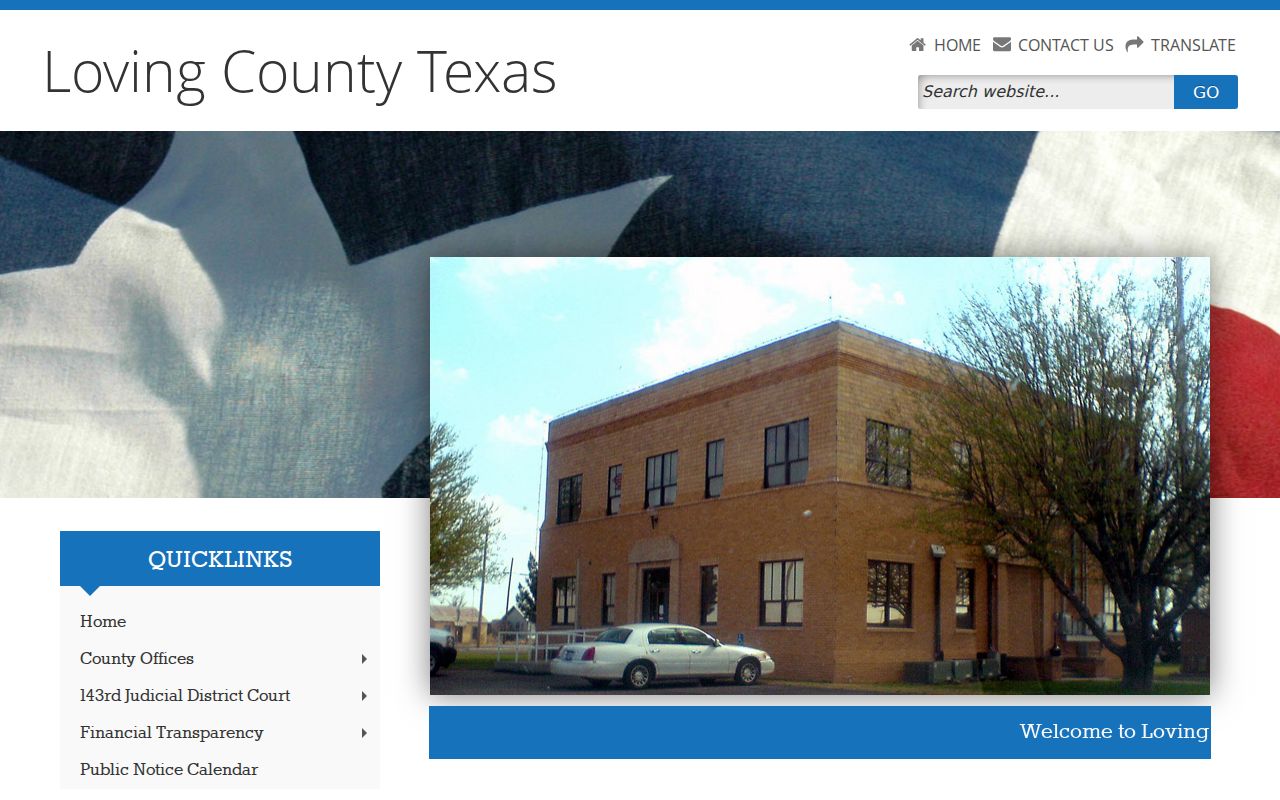
The courthouse is the public starting point for the combined clerk, but the Justice Court and sheriff also maintain separate records.
Official Texas Background Checks
The Texas Department of Public Safety Crime Records Division maintains the statewide criminal-history repository. Its public name search costs one $1 credit per query and returns public convictions and deferred adjudications reported to DPS. A credit is used even when the response says no matching record. Card purchases also carry the published 2.25 percent per-credit charge and a $0.25 transaction charge.
For review of one's own Texas record, fingerprints offer a far better identity match. DPS lists a $15 criminal-history fee plus $10 for FAST electronic capture, or $20 for two hard cards. No fixed IdentoGO site was found in Loving County, so use the official locator at appointment time. The FBI Identity History Summary is a separate fingerprint-based self-record with an $18 federal fee.
| Official check | Scope | Verified base fee |
|---|---|---|
| DPS public name search | Public Texas convictions and deferred adjudications | $1 credit plus card charges |
| DPS FAST personal review | Subject's Texas repository record | $25 with electronic capture |
| FBI self-record | FBI-maintained national submission history | $18 plus capture cost |
| Loving clerk or sheriff | Office-specific local record | Local fee not published |
Loving County Fingerprint Record Review
The DPS FAST instructions control the Texas fingerprint route, service code, identification, and result destination.
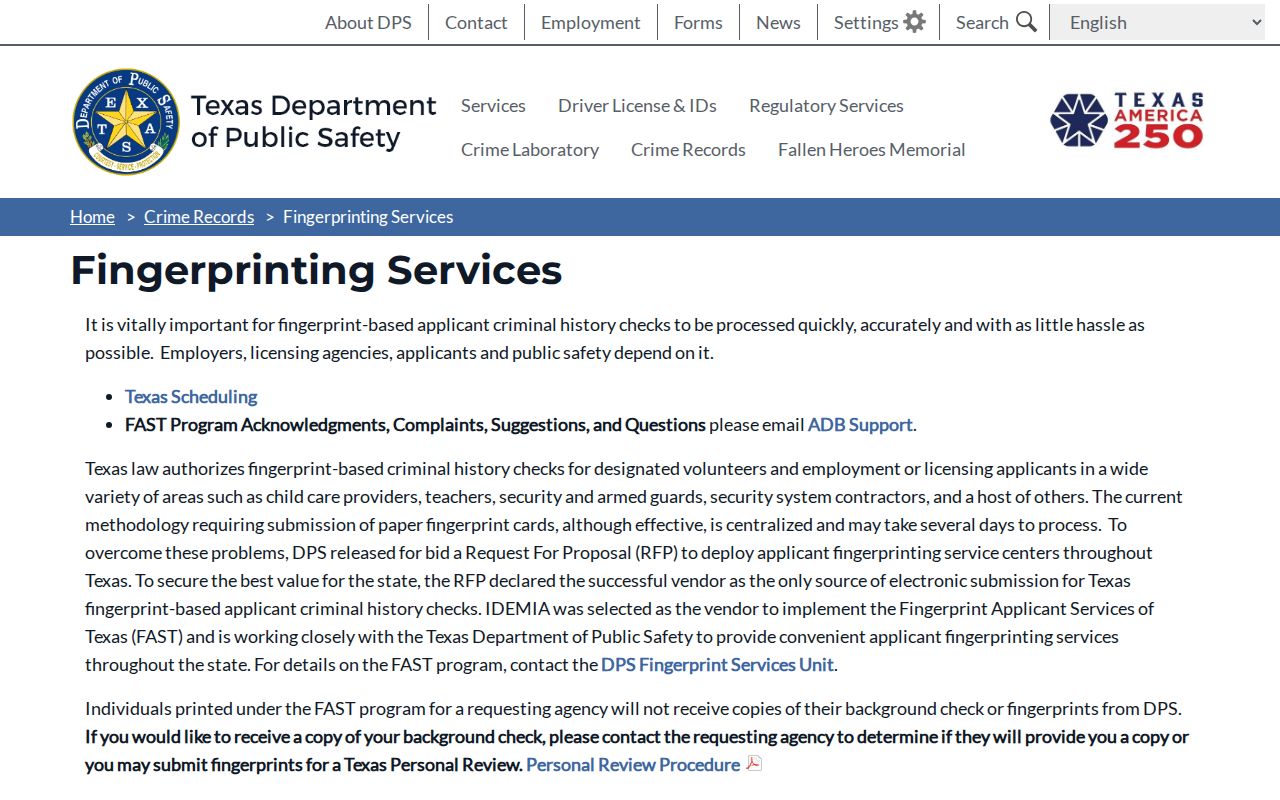
Use the personal-review workflow for a self-check, since a code tied to another legal purpose can route the result to the wrong authorized recipient.
The official IdentoGO scheduler supplies current regional appointment locations after the correct service path is chosen.
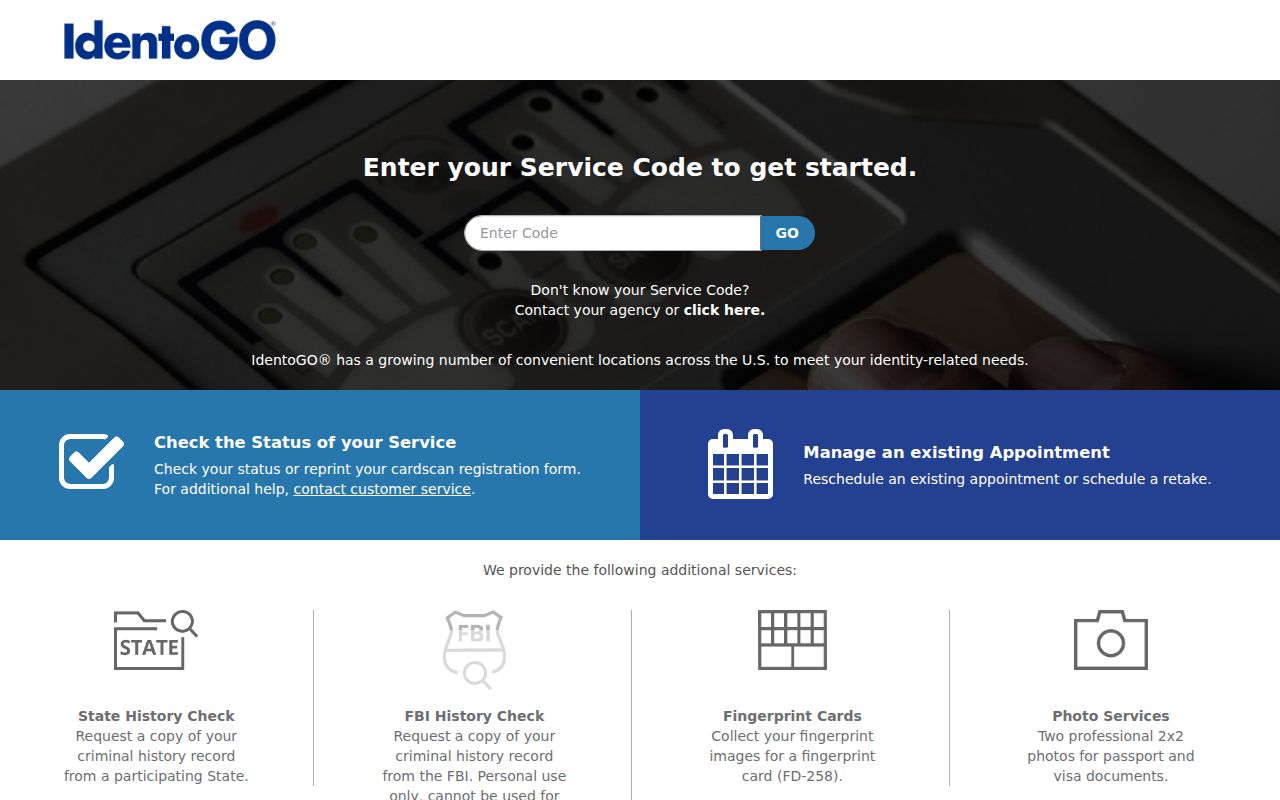
Regional and mobile availability can change, which is why no out-of-county site should be treated as the permanent Loving County location.
For a federal self-review, the FBI electronic ordering system begins the Identity History Summary request.
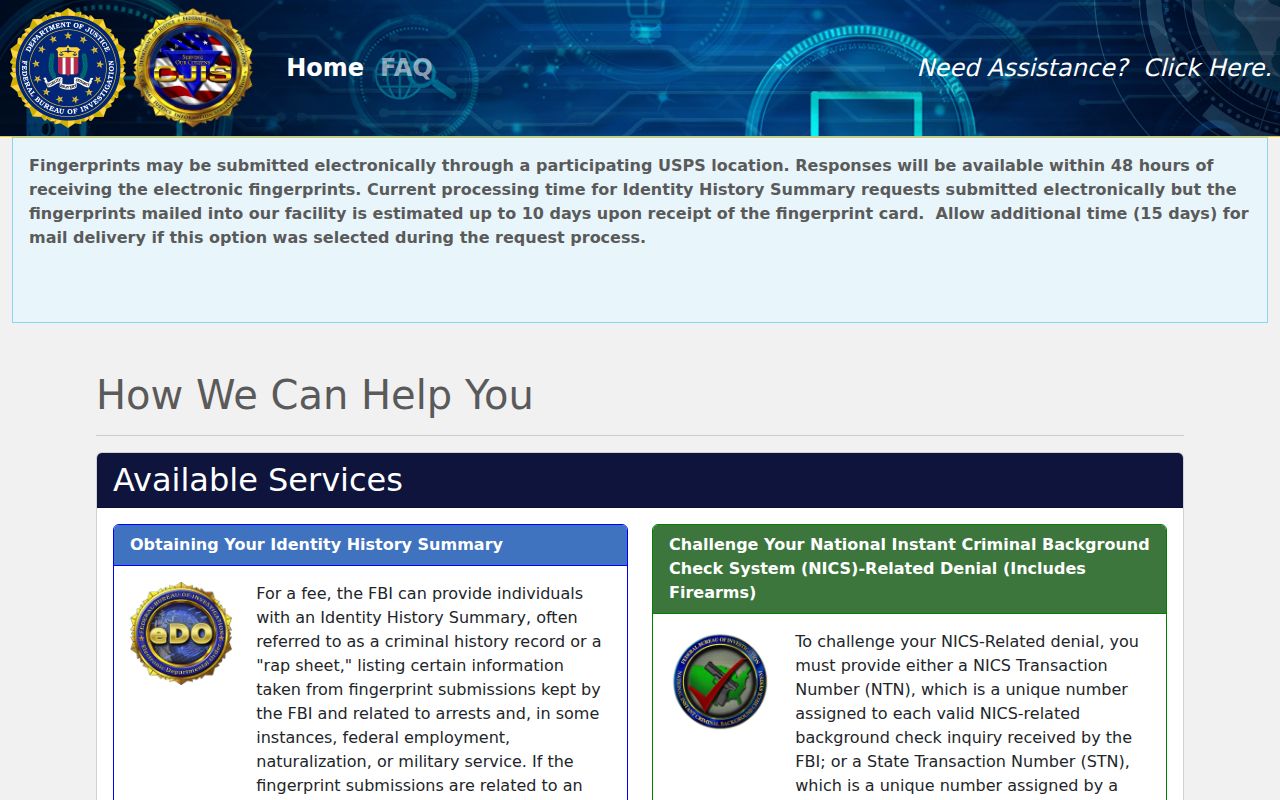
The FBI summary and Texas DPS review answer different questions, and neither replaces the clerk's actual case judgment.
Types of Criminal Records
Each Loving County criminal record reflects one stage of the justice process. The agency that creates it remains the best source for context and correction.
- Incident and arrest reports: Created by the sheriff, constable, DPS, or another investigating agency.
- Booking records: Created by the holding facility and distinct from proof of guilt.
- Court case files: Held locally by the combined clerk or Justice Court, based on case level.
- Warrants and capias entries: Issued through a court and verified with that court and law enforcement.
- State records: DPS, TDCJ, parole, and registry systems each publish a defined subset.
A reader focused on a prosecution can move from the county overview to the detailed Loving County criminal court case records. Arrest-stage detail belongs with the sheriff and booking custodian.
Loving County Arrest Records Leave County
Loving County jail capacity is zero. The sheriff's official jail information sends custody questions to Winkler County Sheriff at 1300 South Bellaire Street in Kermit, (432) 586-3461. A recent arrest can therefore create a Loving County incident record, a Winkler County booking record, and a Loving County court file. The place of booking does not move the criminal case to Winkler County.
The official Loving County sheriff page publishes the local non-emergency number and office hours.
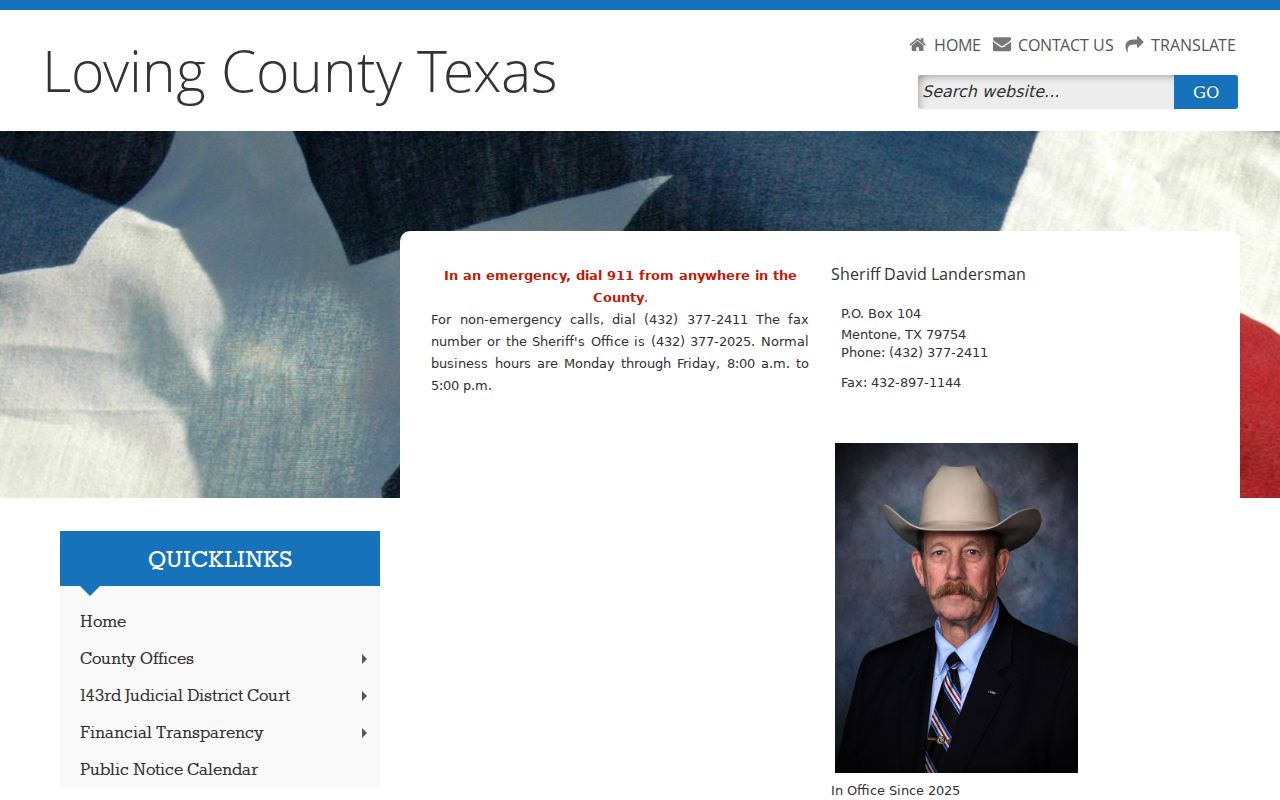
Call Loving County first for the arresting-agency report, then call Winkler County for live booking, bond, release, or transfer facts. Neither county publishes a searchable jail roster.
Note: A person may later move to another county, TDCJ, or federal custody, so a past Winkler booking does not establish present location.
What a Loving County Criminal Record Shows
A Loving County result must be read by record type. A court file centers on one cause number, while a booking file centers on an intake event. DPS links reported arrest and disposition cycles to a state identity.
| Name & Identifiers | Legal name, aliases, date of birth, and agency or repository numbers, with protected values withheld. |
|---|---|
| Arrest / Booking Data | Arrest date, agency, intake charges, bond, booking site, and release or transfer status. |
| Charges & Statutes | Alleged or filed offense, level, count, and governing Texas statute. |
| Disposition | Conviction, dismissal, acquittal, deferred adjudication, no-bill, or another court result. |
| Sentence | Confinement, fine, costs, restitution, or community-supervision terms when public. |
| Custody / Supervision Status | Local transfer, TDCJ location, projected release, probation, or parole basics from the proper source. |
The judgment should resolve a vague status such as “disposed.” It is an outcome category, not a synonym for guilty.
Reading Loving County Record Terms
Short docket labels can hide major differences. These terms help separate an allegation, a case event, and a final result.
- Deferred adjudication
- The court delays a finding of guilt while the person completes community supervision. It is not the same as a dismissal.
- Disposition
- The result of a charge, which may be conviction, dismissal, acquittal, or another terminal event.
- Capias
- A court writ that orders an arrest, often after a missed or later case event.
- No-bill
- A grand jury declined to return an indictment on the charge presented.
- Nondisclosure
- A Texas order that limits ordinary public release but preserves access for entities named by law.
Booking charges are provisional. Prosecutors may reject, amend, reduce, or add charges, so the filed instrument and final judgment are the stronger sources for case outcome.
Public Access Laws
Access depends on both the record and its custodian. The sheriff applies the Texas Public Information Act and law-enforcement exceptions. The combined clerk follows judicial access rules and court orders. DPS applies the criminal-history dissemination limits in Government Code Chapter 411.
Key Statutes:
Texas Government Code Chapter 552 gives access to public information while allowing defined law-enforcement and privacy limits.
Texas Government Code Chapter 411 makes full CHRI confidential and defines the public DPS conviction and deferred subset.
Code of Criminal Procedure Chapter 55A governs current Texas expunction eligibility, procedure, and effect.
Code of Criminal Procedure Chapter 62 controls sex-offender registration and the public registry.
Public access does not make every field public. Juvenile data, active investigative detail, protected victim facts, Social Security numbers, and records covered by an order may be removed or withheld.
Loving County Public Index Limits
The county-linked CountyGovernmentRecords interface is useful for recorded instruments, but it should not be described as a complete criminal-case portal.
Its presence does not replace a call to the combined clerk about criminal case coverage, archived material, document copies, or certification.
For a local file, supply the person's name, the spelling used at the time, an approximate filing year, the court level, and a cause number if known. Ask whether the docket is online, held at the 100 Bell Street counter, archived, or available by mail. Fine-only cases require a separate Justice Court inquiry at the Community Center.
A sheriff request follows a different route. Identify the existing report, date range, incident number, event location, and preferred electronic format. The county publishes no fixed sheriff copy fee or turnaround promise. For body-camera footage, the written description must state the date and approximate time, the specific place, and the name of at least one recorded person. Call first to confirm the current delivery address or email and any expected charge. A request for records is not a request for the office to research a person's life or create a new summary.
Note: re:SearchTX participation and visible metadata do not prove that every Loving County criminal document is available to a public account.
Sealed, Expunged & Restricted
A dismissal does not by itself delete the arrest report, booking entry, or DPS event. Texas Chapter 55A expunction can direct removal, destruction, or return of covered arrest records when every legal requirement is met. An order of nondisclosure has a different effect: it limits ordinary public dissemination but leaves access for criminal-justice and government entities listed by statute.
Eligibility turns on the arrest episode, offense, outcome, waiting period, remaining charges, and other facts. Texas moved expunction law into Chapter 55A on January 1, 2025, so older instructions that cite former Chapter 55 need review. The Loving County and District Clerk can confirm filing venue, current fees, service steps, and local scheduling, but no Loving-specific expunction fee was published.
Juvenile files follow separate Family Code rules. A person correcting a public result should first obtain the source record and judgment, then use the agency's correction process before checking whether the downstream DPS entry changed.
Loving County Warrant Record Checks
There is no official Loving County active-warrant list, name portal, app tool, Most Wanted database, or warrant-amnesty program. Call the sheriff at (432) 377-2411 for arrest or fugitive warrant confirmation. Contact the combined clerk at (432) 309-9500 extension 6 for a felony capias or county misdemeanor bench process. Justice Court handles its own fine-only, traffic, failure-to-appear, and capias pro fine matters at (432) 286-9544.
A person trying to resolve a possible warrant should get the issuing court, cause or warrant number, current status, and bond or balance instructions. Do not appear without warning based on a stale mention. Recall or payment may take time to reach dispatch systems, so ask the issuing court for written confirmation when the process is complete.
Unexecuted, sealed, juvenile, and active-investigation material may remain restricted. A written request can seek existing releasable sheriff information, but it cannot force the office to create a criminal-history report.
Loving County Supervision Records
Community supervision, often called probation, is administered through a county or judicial-district CSCD under Texas standards. Loving County does not publish a standalone CSCD office. Because the 143rd Judicial District spans Loving, Reeves, and Ward Counties, use the judgment or ask the sentencing court for the current reporting office instead of assuming where a person reports.
The Texas Board of Pardons and Paroles makes parole release decisions.
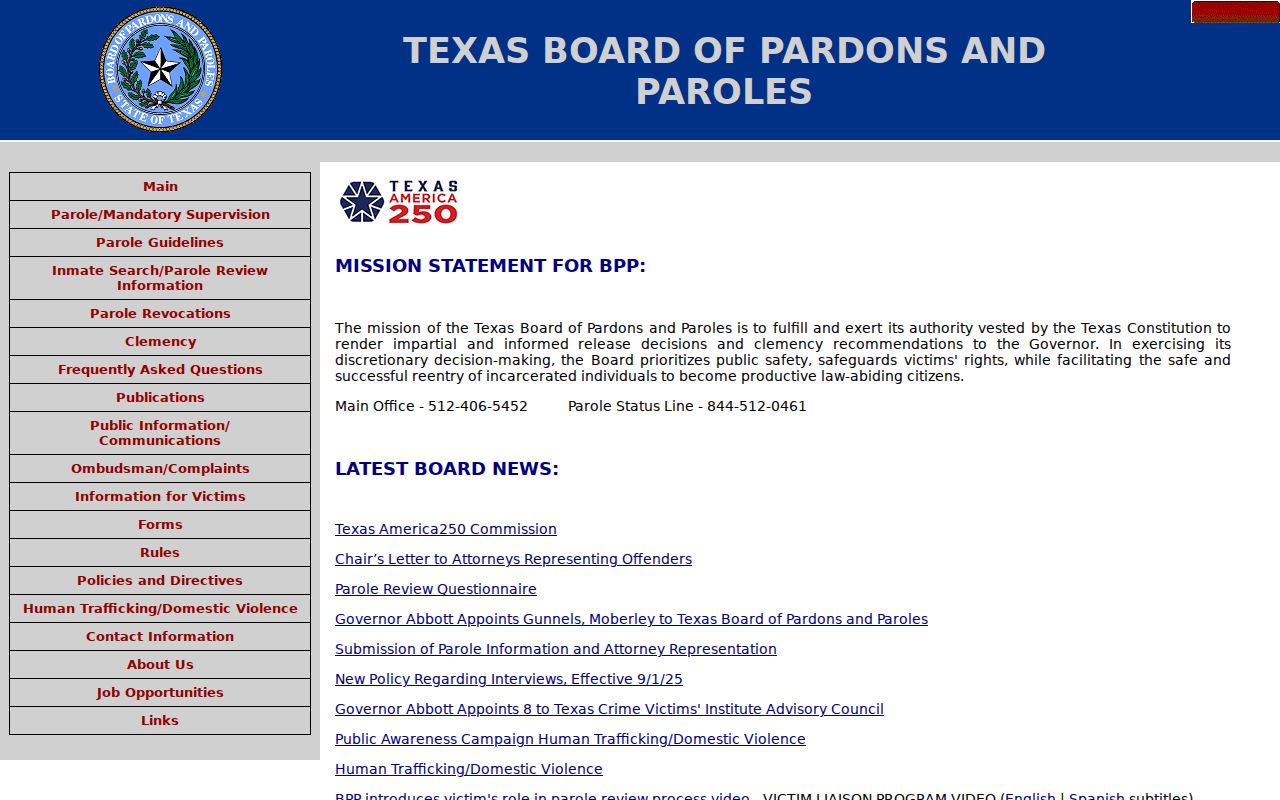
TDCJ Parole Division supervises people after release. Public basics may include offense, sentence, status, and assigned supervision information, while officer notes, treatment, testing, risk, and personal details are not an open public case file.
Loving County Record Context
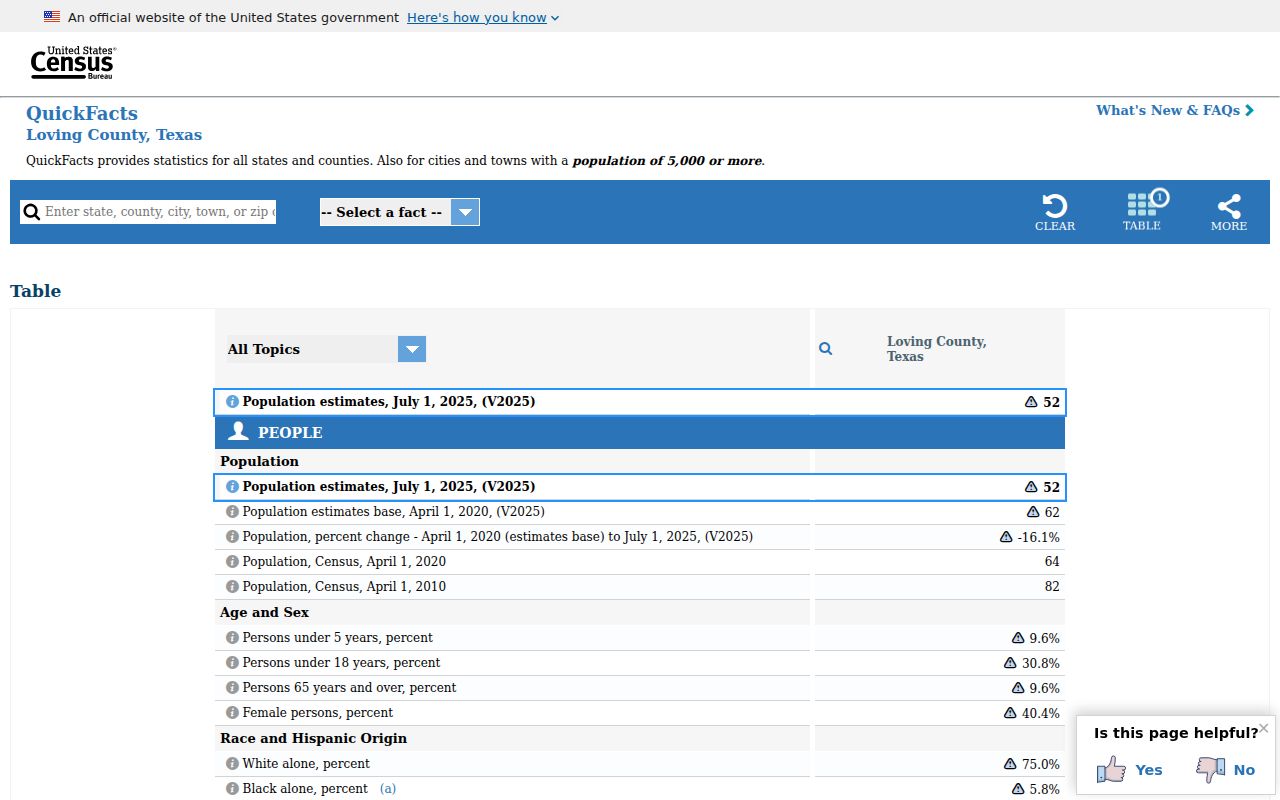
Loving County's tiny population makes raw context vital. Census QuickFacts reports 64 residents in 2020, an estimate of 48 in 2024, and 52 in 2025 across 668.82 square miles. The 2020 to 2024 profile lists 27 households, while 2023 employer data show 663 jobs. Oilfield traffic and a workforce much larger than the resident base help explain why a very small county still maintains a full sheriff and court system.
The official Census county profile provides the population and geography context.
Per-capita crime rankings can swing sharply when only a few events change. Counts, agency participation, and clerk workload reports are more useful than sensational rankings for understanding Loving County criminal records.
Mentone is the unincorporated county seat. It has no police department or municipal court. Sheriff, constable, DPS, clerk, Justice Court, and Winkler booking routes therefore matter more than city channels.
Criminal Records by City in Loving County
Loving County has no incorporated cities or towns, so there are no city criminal-history pages, city police record desks, or municipal court portals to list. Mentone is an unincorporated Census Designated Place and the county seat, not a city. Its incidents route to the Loving County sheriff, constable, or DPS; county court files remain with the combined clerk or Justice Court, and bookings route to Winkler County.